Partner Access Program
Partner Access Program Benefits
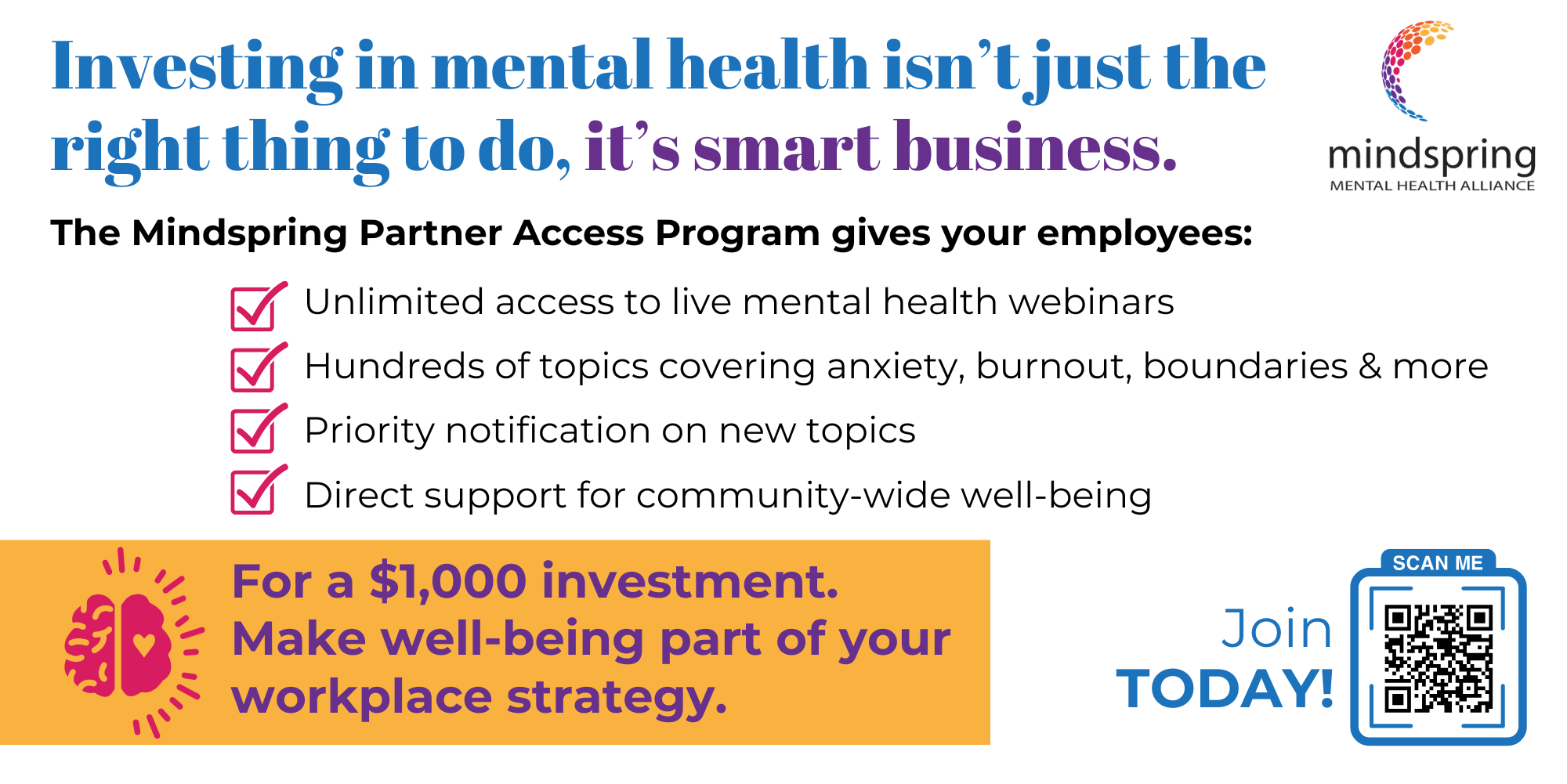
As a Mindspring Partner, your organization will enjoy unlimited webinar access, including exciting new courses on mental health advocacy, aging, trauma, PTSD, stigma awareness & prevention, cannabis and mental health, hoarding, school avoidance, maternal mental health, personality priorities, and ADHD. You'll also get early access to our course calendar, priority registration for our most sought-after webinars, and dedicated technical support.
See full Course Catalog here.
Founding Member Offer
Join today for just $1,000/year to give your entire team unlimited webinar access.
We're deeply grateful for your support. This change allows us to invest in experts, improve programming, and consistently serve you better.
Join the Mindspring Partner Access Program Today!
Thank you to our current Workplace Partners!
Workplace Mental Health Education Program
Empower your team with essential mental health education through Mindspring’s exclusive workplace webinars. Designed to foster a healthier, more supportive work environment, these expert-led sessions address the unique needs of your employees.
Choose from our most popular workplace topics—ranging from stress management to building resilience—or explore our full catalog of mental health courses to find the perfect fit for your team.
Investing in mental health education pays off: for every $1 invested, employers see a $10 return through improved health and productivity. Take the first step toward a healthier, more productive workplace. For more information or to book a webinar please contact info@mindspringhealth.org.
Cost: $400 per webinar
Mental Health in the Workplace Webinar Topics
Stress Reset: Science-Based Strategies for Workplace Well-Being
Stress is a universal human experience, but today’s world amplifies it in unique ways that previous generations did not face. Explore the science of stress with a licensed therapist and gain clarity about why we feel overwhelmed at times, and why certain situations trigger strong reactions. Learn to identify early signs of burnout and explore practical, science-backed strategies to manage stress in the moment. We’ll also cover setting healthy boundaries and developing long term habits to support lasting well-being.
Attachment at Work: Communication, Boundaries, Feedback, and Stress Responses in Professional Settings
Attachment patterns influence more than personal relationships—they shape workplace behavior as well. Explore how attachment styles affect teamwork, communication, collaboration, leadership, and how we handle feedback. Learn why some people shut down under pressure, why others seek reassurance, and how workplace expectations can activate attachment-related reactions. This course includes practical strategies for giving feedback, setting boundaries, and creating predictable, supportive work environments that help everyone function more securely. Part 3 in a 3-part series.
Responding to Difficult Behavior with Confidence
Understanding why difficult behavior is on the rise and what’s really happening beneath the surface changes the way we respond to challenging customers. Discuss the causes and types of difficult behavior in the workplace and learn practical tools for emotional regulation and boundary setting using real-life examples, so you’ll feel confident knowing what to say and how to say it. This course offers actionable insights and strategies to help you navigate challenging interactions with greater ease and resilience.
Work Stress and Burnout
Stress is something we all experience in our personal and professional lives. But when stress is severe or prolonged (or both), it can impact our physical and mental health in major ways. Learn practical tips to manage distress to avoid career burnout and discuss effective ways to cope with a licensed therapist.
Self-Care and Workplace Wellness
People who incorporate self-care throughout their day are more resilient and better equipped to manage stress, leading to happier and more productive teams. Learn ways to introduce self-care into your work life, communicate boundaries, and cope with demanding schedules in this one-hour seminar with a licensed therapist.
What is Emotional Intelligence?
Emotional Intelligence is the ability to recognize your own emotions and how other people feel, and use this information to understand behavior and guide decision-making. It’s a skill set that can be developed and improved; people with high emotional intelligence are better at navigating relationships, managing conflict, and achieving goals.
Explore the core components of emotional intelligence—self-awareness, self-regulation, empathy, and social skills—and gain practical tools to understand and manage your emotions in this one- hour seminar with a licensed therapist.
Personality Priorities at Work
Adler’s four personality priorities – comfort, control, superiority, and pleasing – influence how you think about yourself, how you behave in different situations, and how you relate to those around you. Understanding your own preferences and recognizing them in others can help you navigate relationships more effectively. Identify your dominant priority, understand how it impacts your daily life, and explore practical strategies to create balance and foster stronger connections in this one-hour seminar with a licensed therapist.
Understanding Workplace Anxiety
While stress at work is common, constant and overwhelming anxiety can negatively impact productivity, confidence, and overall health. Discuss common anxiety triggers and practical strategies for managing stress, setting boundaries, and building resilience.
Remote Work and Mental Wellness
Workplace culture is evolving. Remote work promotes inclusivity and has proven to be a benefit to many, though there are potential negative effects – loneliness, lack of clear boundaries, stress, and burnout can worsen mental health. Explore the psychological advantages and challenges of remote work and learn how to maximize focus, productivity, and well-being in this one-hour seminar with a licensed therapist.
Navigating Work Life Balance
Achieving a balance between personal and professional responsibilities helps people to avoid job burnout and promotes employee engagement, retention, and productivity. Explore what work-life balance truly means and the common obstacles that keep us from achieving it. Learn practical strategies to create and maintain balance in your busy life, with actionable tips and inspiration to prioritize what matters most.
Stigma in the Workplace
Research shows that about 75% of employees have struggled with an issue that affects their mental health - but 8 out of 10 workers with a mental health condition say shame and stigma prevent them from seeking mental health care. Discuss the impact of unconscious bias and how stigma influences hiring, organizational supports, and workplace culture. Learn tips for correcting negative perceptions and reducing stigma in this one-hour seminar.
Workplace Violence & De-Escalation Techniques
Violence in the workplace involves a continuum of behavior from threats and verbal abuse to physical assaults and even homicide. Acts of violence are currently the third-leading cause of fatal occupational injuries in the United States, and rates of violence in the workplace are on the rise. These events cause frustration, anger, and pain for employees, customers, patients, and visitors – costing businesses an estimated $36 billion each year. Explore what you can control in these situations and learn practical tools to de-escalate workplace violence & keep others safe when faced with uncontrollable turmoil.
2 Part Series: Workplace Boundaries
Workplace Boundaries: Types, Challenges, & Impact
Many people find it challenging to set boundaries at work—whether it’s saying no, asking for help, or speaking up when overwhelmed. This session will define what workplace boundaries are, why they matter, and how they protect your mental well-being. We’ll explore different types of boundaries, including time, workload, emotional space, and digital communication. You’ll learn how weak boundaries can contribute to stress, burnout, and frustration. Through real-world examples from many types of jobs, you’ll gain insights to identify and strengthen your own boundaries.
Workplace Boundaries: Strategies & Tools
The ability to calmly and respectfully advocate for your needs is an essential skill for modern workforces. Learn practical tools and simple scripts for saying no, asking for help, and managing unrealistic demands. Discuss ways to set clear limits with supervisors, coworkers, and customers, and how to respond when boundaries aren’t respected. Plus, we’ll share strategies to reduce digital overload and stay composed during difficult conversations.
3 Part Series: Workplace Bullying Workplace Bullying:
What It Is, What It Isn’t, and Why It Hurts
This session helps participants clearly understand what workplace bullying looks like, how it differs from normal conflict or feedback, and why it can be so damaging over time. Explore common bullying behaviors, power dynamics, and workplace conditions that allow bullying to continue with a licensed therapist. Emphasis is placed on validation, clarity, and reducing self-blame.
Workplace Bullying: Boundaries, Documentation, and Safe Responses
This session focuses on practical tools for responding to workplace bullying in ways that prioritize safety and emotional regulation. Participants learn how to manage stress responses, use clear boundary language when appropriate, and document concerning behavior. Learn when to engage, when to disengage, and how to make informed decisions about next steps with a licensed therapist. Workplace Bullying: Healing,
Accountability, and Moving Forward
Workplace bullying can leave lasting emotional effects for those targeted, for teams, and for organizations. This session focuses on recovery, rebuilding confidence, and protecting long-term mental health — while also addressing support and accountability for individuals who have engaged in bullying behavior. Participants explore what healing can look like on both sides of harm, without minimizing impact or shifting responsibility. Emphasis is placed on emotional repair, behavior change, and realistic paths forward.
<scribe-shadow id="crxjs-ext" data-crx="okfkdaglfjjjfefdcppliegebpoegaii" style="position: fixed; width: 0px; height: 0px; top: 0px; left: 0px; z-index: 2147483647; overflow: visible; visibility: visible;"></scribe-shadow><scribe-shadow id="crxjs-ext" data-crx="okfkdaglfjjjfefdcppliegebpoegaii" style="position: fixed; width: 0px; height: 0px; top: 0px; left: 0px; z-index: 2147483647; overflow: visible; visibility: visible;"></scribe-shadow><scribe-shadow id="crxjs-ext" data-crx="okfkdaglfjjjfefdcppliegebpoegaii" style="position: fixed; width: 0px; height: 0px; top: 0px; left: 0px; z-index: 2147483647; overflow: visible; visibility: visible;"></scribe-shadow>